
Nordic Models: The Arts, Culture, and Politics of a Region
The Nordic Models research cluster studies the cultural histories of the Nordic now. In which ways are the arts and culture of the region shaped by histories of class, gender, and race? What are the recurring tropes organizing an aesthetics of ‘nordicness’ – and what and who is left out of this cultural and political framework? How best to understand the aesthetic and affective conventions of Scandinavian nationalisms? How does cultural policy regulate social and national borders? These are some of the questions shaping the collective endeavor of the Nordic Models research cluster.
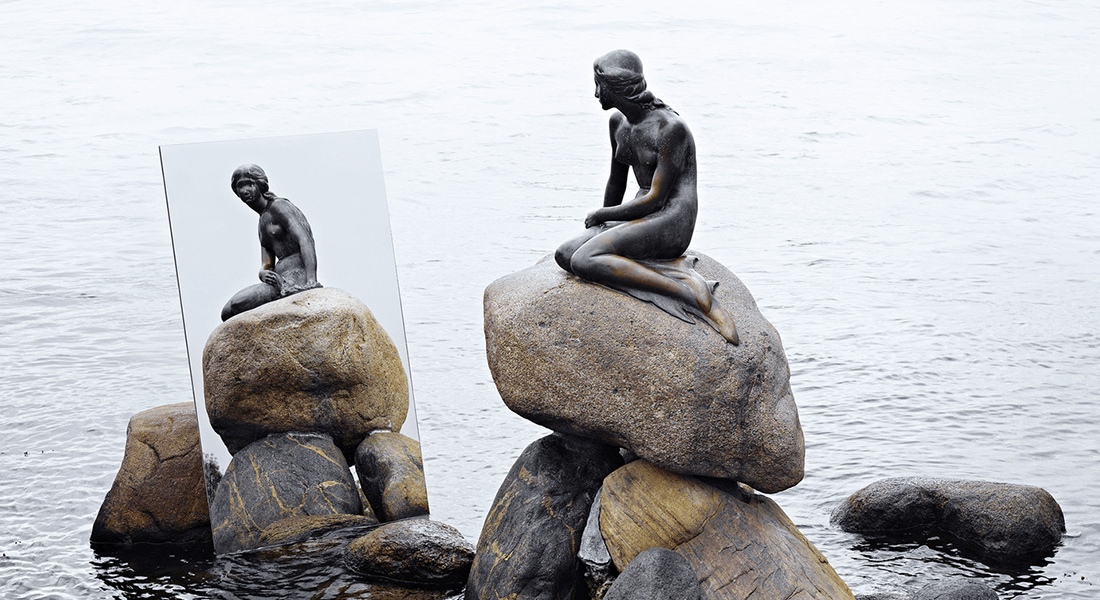
We take an interest in what has come to be known as the “Nordic model” of the welfare state and its genealogies, promises, and current paradoxes. Yet we approach this model not merely as a state model, but also as a cultural model structuring dominant social imaginaries, cultural institutions, affective attachments, and aesthetic conventions pivotal to the Nordic countries, including perspectives on their former colonies and current self-governing polities in and outside the region.
Adopting a strong interdisciplinary scope for analyzing the arts, culture, and politics of the Nordic societies, a key objective of the cluster is to provide a vibrant and supportive research environment in which PhD fellows and early-career researchers can participate in the consolidation of a rich research area, benefitting the department and beyond.
Infrastructure and Power
The Nordic welfare states are often associated with equality and social inclusion, yet inequalities continue to shape access to resources, participation, representation and belonging. We examine infrastructures – material, institutional and affective – as the often invisible arrangements that organize cultural and social life in the Nordic region. Cluster members explore how cultural industries, institutions, archives, educational systems and policy frameworks reproduce and/or challenge relations of power. With an ethnographic sensitivity to everyday practices and lived experience, we also attend to artistic, activist, and community-based interventions that make these infrastructures visible and reshape forms of access, participation, and social organization.
Nordic Coloniality
The Danish-Norwegian participation in the transatlantic triangular trade and colonization of Iceland, Faroe Islands, Kalaallit Nunaat, US Virgin Islands, India, and Ghana, as well as settler colonialism in Sàpmi are points of departure for giving accounts of both colonial continuities and decolonial practices in the Nordic region. Across various methodological approaches, artistic practice-based Ph.D scholars, curators, and academic researchers in the cluster discuss artistic practices as participating in (counter)memory work, undoing internalized colonization, and we learn about indigenization in academia and in the cultural sector. We analyze possibilities of repair and truth and reconciliation within a context dominated by frameworks of national border-drawing and rationales of Nordic exceptionalism, hegemonic feminism, and white colonial ignorance.
Cultures of Feeling
While the “Nordic model” of the welfare state has been carefully studied in its economic and political features, its emotional dimensions remain largely unexplored. To remedy this, we develop theoretical and analytical frameworks for understanding collective emotional life in the Nordic countries. Through close readings of cultural objects and processes that shape the social and moral order, the cluster explores ways of feeling that are collectively shared and thus historically significant. Affective structures discussed in the cluster include privilege-guilt, moral goodness, the sense of racial isolation, and communal joy as an utopian impulse.
AfroNordic Studies
The Nordic Models cluster is committed to learning from and supporting the development of AfroNordic studies. We take an interest in the way AfroNordic scholarship advances conversations about African diasporic life, belonging, antiblackness, and coloniality in relation to the Nordic welfare states as white majority contexts dominated by color evasiveness. Cluster members study the arts and culture related to the African diaspora and blackness in the Nordic region, including curating, archiving, community organising, protesting, and institution building. The cluster is interested in the impact of the Nordic welfare states’ cultural and immigration policies on AfroNordic cultural production.
Feminist Methodologies
How do we select and approach our objects of study? By foregrounding experiences connected to everyday life, emotions, bodies, and situated forms of knowledge, feminist research emphasises positioning, intersectionality, and reflexivity as key methodological tools; research within the cluster draws on feminist methodology as a foundation for discussions of how discourses related to, for example, colonialism, capitalism, heteronormativity, extractivism, and sexism continue to shape, the cultural and political construction of the “Nordic.” With particular focus on who produces knowledge, from where, and for whom, the cluster engages questions of methodology while creating space for the development of new scholarly approaches and writing practices.
A red thread this semester: How do we build and sustain valuable international relations in our research and teaching? And how do we best support each other in building such relations?
Friday 18 September, 12:00-13:00
Lunch, News & Course Check-in
Thursday 8 October, 12:00-13:00
Lunch, News & Course Check-in
Thursday 22 October, 13:00-15:00
On Nordic Neoliberalisms
Seminar
Wednesday 25 November, 16:00-18:00 (followed by dinner)
Colonial Care
Seminar with Lene Myong (UiS)
Friday 11 December, 10:00-12:00 (+ lunch)
International Relations
A Collective Brainstorm & Guests
16 and 17 December, 10:00-15:00 (followed by a drink)
Cluster-Shut-Up-and-Write
Projects
- Curating the Contemporary in the Art Museum
- Feminist emergency: Women artists and feminist art in Denmark over the last sixty years in a globalized context
- Gendering Music Matter (GEMMA)
- The communities of separatism - Affects in and around separatist artist collectives in the Nordic countries, contact: Cecilie Ullerup Schmidt
- The Art of Nordic Colonialism Writing Transcultural Art Histories
- The Sound of Women’s Struggle. Music in and around the Danish Red Stocking Movement (1970-1985)
Groups
- The 1930s today (in Danish)
Art as Forum
Centre period: 2019 - 2024
Contact: Frederik Tygstrup
Researchers
Internal
| Name | Title | Phone | |
|---|---|---|---|
| Ehlers, Jeannette Pollard | External, Ph.d Student | ||
| Greaves, Kerry | Associate Professor | +4522744513 | |
| Moore, Signe Søndergaard | PhD Fellow | +4535336139 | |
| Nexø, Tue Andersen | Associate Professor | +4535321268 | |
| Pallesen, Xenia Brown | PhD Fellow | +4535336552 | |
| Ringsager, Kristine | Associate Professor | ||
| Schmidt, Cecilie Ullerup | Associate Professor | ||
| Sharma, Devika | Associate Professor - Promotion Programme | +4535329261 | |
| Tygstrup, Frederik | Professor | +4535328207 | |
| Ullman, Anna | PhD Fellow | +4535336306 |
Affiliated participants
Niklas Freisleben Lund (SDU)
Solveig Daugaard (AU)
Morten Larsen (University of Washington)
Nina Cramer (Astrid Noacks Atelier)
Steering Committee
Ellen Suneson
Cecilie Ullerup Schmidt
Kristine Ringsager
Devika Sharma