
Nature at Work: Agricultural Practices and Metabolic Imaginaries in Danish Literary History
In Denmark, agriculture has deeply influenced both our landscape and cultural identity. At the same time, the current, dominant practices of large-scale industrialized farming are proving ecologically unsustainable. This has placed agriculture at the heart of urgent discussions about pollution, ecological degradation, and climate change.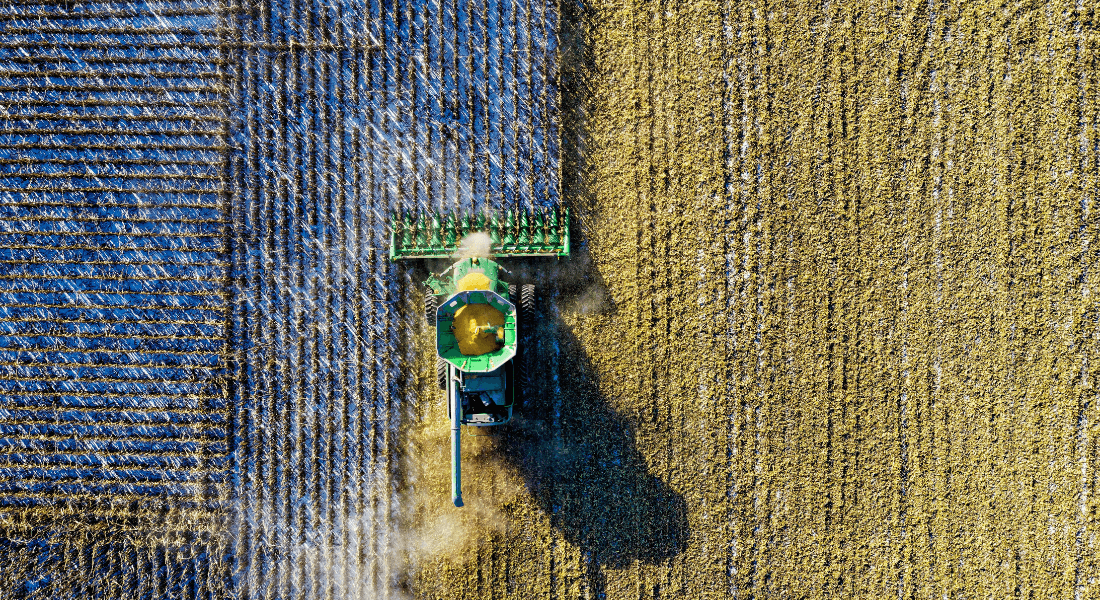
Nature at Work (NaW) aims to reinterpret the history of modern Danish rural literature – literature about agricultural practices and the worlds they create – in light of this historical situation. NaW shows the renewed relevance of an important, but somewhat neglected thread in Danish literary history. It also shows how the literary past can enrich our understanding of our contemporary, ecological predicament.
NaW explores literary responses to two key transitions in modern Danish agriculture, and the social and ecological consequences of these transitions. 1) The expansion of arable land through intensified cultivation of heathlands, drainage, and stream regulation at the turn of the 20th century. These changes are reflected in works of the authors such as Jeppe Aakjær, Johan Skjoldborg, J. V. Jensen and Marie Bregendahl. 2) The agricultural industrialization in the second half of the 20th century and its intensification in contemporary Denmark. Focus will be on works by Knud Sørensen, Jens Smærup Sørensen, Hans Otto Jørgensen, Vibeke Grønfeldt, Mathilde Walther Clark and Malte Tellerup.
Rather han focusing on the cultural history of rural Denmark, NaW focuses on literary depictions of the work we have made the non-human web of life surrounding us do for us (Moore 2015), and the work we have done to transform it – from the clearing of fields to the use of pesticides – in order to make it serve our physical and economic needs. It also examines how literary works have made sense of the unwanted consequences of these transformations, and how they have imagined the human lives caught within them – their social conditions, their existential priorities, the temporalities dominating their lives, the ways they perceive the more-than-human processes surrounding them.Through the question of agriculture, NaW thus discusses literary attempts to make sense of the constant, changing, world-producing and world-degrading interplay between human activity and the non-human material processes surrounding us. Building upon recent trends in Eco-Marxism (Foster 1999, Moore 2015, Mau 2022, Schaupp 2024, Battistoni 2025), NaW conceptualizes this as a question of metabolic imaginaries.
The project will contribute with: 1) an important revision of the dominant narrative of modern Danish literary history. The long, diachronic lines in Danish literature has typically been told as a movement towards urban modernity, as a story of liberation from the past – and as a story of a growing distance between human life worlds and any material engagement with the biological and chemical processes surrounding us (P. Mortensen & Schack 2006-2009; Mai 2011-2012). NaW focuses instead on literary works and traditions that “stay with the trouble” of this relation (Haraway 2015), and thus shows their relevance for our current historical moment. 2) Concepts and reading strategies which can also be used to examine literary works from other nations and periods.
NaW is part of the field of environmental humanities and literary ecocriticism. Its focus upon agriculture – and through this: the work done by/done upon the web of life – entails an important, new development compared to the dominant premises of the latter, however, both with regard to conceptual framework and with regard to the types of literature discussed by it.
A research goal of NaW is the development of reading strategies that can accommodate the expansion of literary history and textual analysis to include our nonhuman environment and our working relation to it as part of its context. The work will draw upon earlier historiographical and methodological work by AF and TAN (Fastrup, Nexø et. Al. 2015-2021, Fastrup 2023).
Building upon the philosopher Charles Taylor’s concept of social imaginaries (Taylor 2004), subproject 1 develops the concept “metabolic imaginaries”. This entails how we imagine the relationship between human and nonhuman actors – are nonhuman co-producers imagined as recalcitrant, bountiful, or threatening, cooperative, dominated, or in need of discipline? It also entails normative notions regarding what constitutes meaningful human and nonhuman lives caught within the double work of agriculture, and how we make sense of possible unwanted transformations – social as well as ecological – caused by agricultural practices. As a working hypothesis, subproject 1 posits that the contours of dominant epochal metabolic imaginaries connect to regimes of historically dominant forms of agriculture. A core question is then how to theorize the relationship between dominant imaginaries and the multiplicity of depictions found in literary works of a certain era. Here, subproject 1 will pursue two overlapping avenues:
- Questions of literary form: Subproject 1 will develop reading strategies to focus upon literary depictionsof nonhuman motifs and how they interact with human figures. This includes examining the possibility of seeing nonhuman motifs – most obviously the farm, the agricultural production unit itself – as narrative protagonists. It also includes examining how the rhythm of distinct agricultural practices are reflected in narrative form, and how attempts to depict the ongoingness of agricultural work, and human’s existential reactions to it, complicate inherited genres focusing on human society or individual change. Finally, it will develop strategies to analyze questions of tone (polemic, nostalgia, wish fulfillment) and figuration (esp. allegory and prosopopeia, often used in literary depictions of nonhuman actors) when examining the metabolic imaginary of literary works.
- The possibility of contesting imaginaries: Subproject 1 develops reading practices highlighting how older metabolic imaginaries echo through time, not least through intertextual allusions and generic form. It will also develop reading practices that allow for the possibility that literary works react polemically against dominant agricultural practices and the nonliterary discourses legitimizing them, producing their own “counter”-imaginaries in the process.
Subproject 2 focuses on the Popular Breakthrough and the interwar period, examining the novels and poetry of authors such as Johannes Skjoldborg, Jeppe Aakjær, Johannes V. Jensen, Marie Bregendahl, Nicoline Kirkegaard, Thøger Larsen, and Morten Korch. Written during a period of increasing commercialization in Danish agriculture, these authors reveal a metabolic imaginary centered on the relationship between the landscape and the relentless human labor to maximize productivity through practices like cultivating marginal land, drainage, and stream regulation.
Subproject 2 will explore:
- how the farm is portrayed as the true protagonist, functioning as the agent of transformation in interpersonal relationships – including those between husband and wife, parents and children – as well as in interactions between humans, animals, and the landscape, turning them all into instances of hard work, toil, and deterioration;
- the tension between the realism of novels and the figurative aspects of poems and lyric poetry in their portrayals of crop growth, landscapes, animals, birds, and peasants. Of special interest here is the frequent use of prosopopeia, which will be examined as a rhetorical device to project a fantasy of productivity without labor;
- the authors’ attempts to counterbalance the costs of agricultural progress – such as exhaustion, numbness, and the reduction of geographic, cultural, and biological diversity – by advocating for the preservation of local dialects, folkklore, and the reminiscenses of the Danish moraine landscape. This study will develop the thesis that the folk tales and legends collected by Evald Tang Kristensen, with whom Aakjær, Skjoldborg and Larsen were collaborating, are seen as reflections of a metabolic imaginary in which nature exists untouched by human labor and in which the earth is seen as a realm of untapped depths inhabited by superhuman or extra-human life forms.
Subproject 3 focuses on literature reacting to the dominant form of agriculture in Denmark after 1950: industrial, commercial farming, and its intensification in the 21st century. It focuses on works by authors such as Knud Sørensen, Jens Smærup Sørensen, Vibeke Grønfeldt, Hans Otto Jørgensen, Malte Tellerup and Mathilde Walter Clark. Across generations, these share a concern for the social and environmental transformation brought about by the industrialization of agriculture in postwar and contemporary Danmark: the ever-larger production units, the increasingly refined use of chemicals (from pesticides to artificial fertilizers to antibiotics), the constant work to make plants, animals, and the landscape conform to the demands of a global economy. Prominent among of these are the homogenization and depopulation of the rural landscape (since manual labor of humans becomes superfluous and farm animals are isolated in gated production units); increases in the economic and biological productivity of the farm, but also the homogenization of its biological processes; pollution of what from the perspective of the farm are nonproductive parts of the territory.
Subproject 3 develops the thesis that postwar and contemporary Danish literature show a relatively stable metabolic imaginary hostile to industrial agriculture and its relationship to its more-than-human co-producers. In contrast to earlier depictions of agriculture, the primary conflict is not imagined to be between humans and a recalcitrant landscape, but between economic necessity and the processes of life, be they human or non-human. In these works, industrial agriculture is typically depicted as producing a less livable world for both humans and non-humans. Within this thesis, subproject 3 will:
- chart the scales (chemical, biological, climatic), the contours of, and the variations within this metabolic imaginary as it unfolds in recent Danish literature. Earlier writers of the period are more concerned with changes in the relation between the farmer and his non-human co-producers – the animals, the plants, the soil – whereas questions of ecological sustainability and animal rights come to the fore in the 21st century. Subproject 3 will also
- map and interpret the different literary tonalities this imaginary produces. Whereas earlier depictions of industrial agriculture tend to be informed by nostalgic moods and focuses upon the life world of the farmer, recent literature about Danish agriculture shifts uncomfortably between horror-like and utopian tonalities (Nexø 2025).
Researchers
| Name | Title | Phone | |
|---|---|---|---|
| Fastrup, Anne | Associate Professor - Promotion Programme | ||
| Nexø, Tue Andersen | Associate Professor | +4535321268 |
Funding
 Project period: 1.2.2026 - 1.7.2029
PI: Anne Fastrup
Co-PI: Tue Andersen Nexø